

Why Houston Freeway Merges Create Dangerous Blind-Spot Conditions for 18-Wheelers
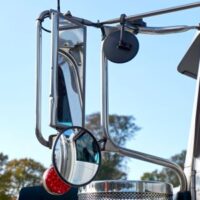
A truck’s blind spot can explain why a driver failed to see a car, but it does not automatically excuse an unsafe lane change. If an 18-wheeler sideswipes you while traffic is merging, preserve video and identify information from the tractor and trailer as quickly as possible. The most important evidence may exist only briefly on an onboard camera, electronic system, or trucking-company server.
Houston’s entrance ramps and major interchanges create repeated moments when a passenger vehicle can be beside a trailer while the truck driver is checking mirrors, watching traffic ahead, and preparing for a lane movement. At freeway speed, a small lateral movement by the truck can send a much smaller vehicle into a barrier or surrounding traffic.
What to Do After an 18-Wheeler Blind-Spot Accident
- Seek medical attention and describe every impact, including a barrier strike or secondary collision after the truck first made contact.
- Save your dashcam recording and ask witnesses whether they have video before their devices overwrite it.
- Photograph the tractor, trailer, company name, USDOT number, license plate, damage locations, lane markings, and nearby ramp or interchange signs.
- Keep the damaged vehicle available long enough for important impact evidence to be documented.
- Consider early legal help when truck cameras, electronic vehicle data, GPS information, or company records could resolve the lane-position dispute.
Because the carrier controls much of the time-sensitive evidence, guidance from a knowledgeable Houston truck accident lawyer can help determine whether a blind-spot collision resulted from an unsafe lane change rather than an unavoidable visibility problem.
Why Houston Merges Create a Blind-Spot Problem
An 18-wheeler has large areas around the tractor and trailer that are difficult to see directly. A passenger car can be visible in one mirror and then move into an area where the driver has limited visibility. The problem becomes more serious when an entrance lane is ending or traffic from a connector is joining the freeway.
FMCSA treats merges and lane changes as demanding maneuvers because commercial drivers must maintain awareness of traffic around a large vehicle. TxDOT’s roadway-design guidance also emphasizes sight distance, acceleration lanes, traffic volume, and weaving space at freeway ramps. Houston interchanges can compress all of those factors into a short stretch of roadway.
Truck Drivers Still Have to Make Safe Lane Changes
Texas Transportation Code Section 545.060 requires a driver to stay as nearly as practical within a marked lane and to move from the lane only when the movement can be made safely. Sections 545.103 and 545.104 also address safe lateral movement and signaling. Those rules apply to commercial drivers operating vehicles with known visibility limitations.
After a collision, the insurance carrier may argue that the car was simply riding in the truck’s blind spot. Fault still depends on how long the car had been beside the trailer, whether the truck signaled, whether the passenger vehicle was already established in the lane, and whether available mirrors or camera systems were properly used. Blind-spot geometry is one part of the sequence, not the final answer on fault.
Passenger-Vehicle Actions Can Also Affect Fault
FMCSA advises drivers of passenger vehicles not to linger in large-truck blind spots and to leave room when merging in front of a truck. An insurer can rely on that guidance when arguing that a car accelerated beside the trailer, stayed where it was difficult to see, or cut in too closely before the collision.
A fair assessment still depends on the actual sequence. The truck may have drifted across the lane marker while the car maintained its course, both vehicles may have moved at once, or a third driver may have forced one of them to react. Video and physical evidence are usually more reliable than a broad statement that someone was “in the blind spot.”
Truck Video and Electronic Data Can Show How the Lane Change Happened
Blind-spot crashes often produce opposite stories. The truck driver says the car suddenly appeared beside the trailer; the passenger-car driver says the truck moved over without warning. Onboard cameras can show traffic ahead and sometimes activity along the side of the vehicle. Dashcams, business surveillance, and nearby commercial-vehicle cameras can add another view.
Depending on the truck and systems installed, electronic data can also help establish speed, braking, steering, GPS location, and other activity immediately before impact. Dispatch records and driver logs may matter if fatigue or scheduling pressure becomes relevant. The value of these records is highest when they are preserved before routine overwriting or retention practices remove them.
A Sideswipe With an 18-Wheeler Can Become a Multi-Impact Crash
The first contact may occur along the side of the car, but the danger comes from what happens next. A tractor-trailer can push a passenger vehicle toward a concrete divider, rotate it across traffic, or leave it exposed to a second high-speed impact. Occupants can suffer head injuries, spinal injuries, fractures, shoulder trauma, and internal injuries even when the first visible scrape seems limited.
Medical records should document every impact and the progression of symptoms. Lost wages, rehabilitation, future medical needs, and lasting physical limitations can become part of a serious truck accident claim when the evidence supports them.
Preserve Truck Evidence Before It Disappears
A carrier’s description of the crash as a “blind-spot accident” should not end the analysis. Video, electronic data, damage patterns, and the truck’s lane movement can show whether the passenger vehicle was already beside the trailer and whether the driver had enough time to recognize it.
Preservation matters. The onboard video and electronic records can be overwritten, while the tractor and trailer can quickly return to service. Once that evidence is gone, the dispute may depend far more heavily on competing recollections.
Frequently Asked Questions
Can a truck driver be responsible if my car was in the truck’s blind spot?
Yes, depending on the facts. Commercial drivers operate vehicles with known blind spots and still must make lane movements safely. The location of the car is only one part of the fault analysis.
Is the merging driver always at fault?
No. Fault depends on the conduct of the drivers, their lane positions, signaling, speed, traffic conditions, and the timing of the lane movements.
What evidence is most useful in an 18-wheeler sideswipe case?
Dashcam footage, truck camera recordings, electronic vehicle data, photographs, witness accounts, GPS information, and damage patterns can help establish where the vehicles were before contact.
Why is preserving truck data urgent?
Some video and electronic records are kept only for limited periods or may be overwritten in the ordinary course of business. Early preservation can prevent important evidence from disappearing.
Can several drivers share responsibility?
Yes. A truck lane change, passenger-vehicle movement, or actions by another driver can all contribute to the same collision. Texas law allows responsibility to be divided when the evidence supports it.
Contact the Law Office of Shane R. Kadlec After an 18-Wheeler Blind-Spot Crash
The Law Office of Shane R. Kadlec has handled serious Houston injury cases for decades. Shane R. Kadlec is Board Certified in Personal Injury Trial Law, and the firm’s established team has experience preserving commercial trucking evidence, evaluating serious injuries, and preparing cases for litigation when a carrier or insurer disputes responsibility.
If an 18-wheeler moved into your lane or caused a blind-spot collision, speak with our truck accident attorneys in Houston. We can take steps to preserve truck video, electronic data, and company records while the lane movements can still be reconstructed.
Sources:
- Texas Transportation Code Section 545.060, Driving on Roadway Laned for Traffic. statutes.capitol.texas.gov/?tab=1&code=TN&chapter=TN.545&artSec=545.060
- Texas Transportation Code Section 545.103, Safely Turning. statutes.capitol.texas.gov/?tab=1&code=TN&chapter=TN.545&artSec=545.103
- Texas Transportation Code Section 545.104, Use of Turn Signals. statutes.capitol.texas.gov/?tab=1&code=TN&chapter=TN.545&artSec=545.104
- Texas Department of Transportation, Roadway Design Manual. txdot.gov/content/dam/txdotoms/des/rdw/rdw.pdf
- Federal Motor Carrier Safety Administration, CMV Driving Tips – Inadequate Surveillance. fmcsa.dot.gov/safety/driver-safety/cmv-driving-tips-inadequate-surveillance
- Federal Motor Carrier Safety Administration, Tips for Passenger Vehicle Drivers. fmcsa.dot.gov/ourroads/tips-driving-safely-around-large-trucks-or-buses