

Truck Accidents on I-10 Through Houston’s Major Freight Corridor
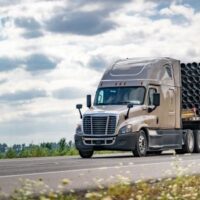
A serious truck crash on a busy freeway like I-10 should be treated as a time-sensitive evidence problem from the beginning. If you were hit by an 18-wheeler on the East Freeway or Katy Freeway, preserve photographs, witness information, dashcam footage, and the truck’s identifying information as soon as you can. Driver logs, onboard video, GPS records, and electronic truck data may later show why the collision happened, but much of that evidence is controlled by the carrier rather than the injured person.
I-10 puts commercial trucks into two very different Houston environments. East of downtown, freight traffic moves through the industrial and Port Houston network. West of downtown, the Katy Freeway combines through-trucks with dense commuter traffic, major interchanges, and abrupt congestion. Both sides create dangerous moments when a heavy truck must merge, change lanes, or stop around much smaller vehicles.
What to Do After a Truck Accident on I-10
- Get medical care and continue recommended treatment for symptoms that persist or worsen after the crash.
- Photograph the tractor, trailer, company name, USDOT number, license plate, vehicle damage, roadway, and nearby exit or interchange signs.
- Save dashcam footage and collect witness contact information before drivers leave or recordings are overwritten.
- Keep the damaged vehicle available until significant impact evidence has been documented.
- Seek early legal help if truck video, electronic data, logs, dispatch information, inspection records, or maintenance documents may be needed to determine fault.
Because much of the evidence is controlled by the carrier, working with an experienced Houston truck accident lawyer can help determine whether speed, following distance, or a lane movement contributed to a serious collision on I-10.
I-10 East Carries Freight Through Houston’s Industrial Corridor
The East Freeway connects with a broad freight network serving Port Houston terminals, warehouses, rail facilities, refineries, and distribution centers. TxDOT’s Houston District Truck Mobility Study examined truck travel between regional highway gateways and major port facilities and found that much of the truck movement serving those facilities remains within the Houston region.
A truck traveling a regional freight route can enter I-10 from an industrial connection and then change lanes again for another freeway, warehouse, or port-related destination. Passenger vehicles are making their own commuting and exit movements in the same space. The result is repeated side-by-side interaction between cars and commercial trucks rather than a simple stream of long-haul traffic passing through the city.
The Katy Freeway Adds Dense Traffic and Sudden Slowdowns
West of downtown, I-10 carries freight through one of Houston’s busiest commuter corridors. TxDOT has identified heavy congestion along the Inner Katy segment and has studied safety and capacity improvements farther west between State Highway 6 and Grand Parkway. Traffic that is moving quickly can compress with little warning near entrances, exits, and major interchanges.
A loaded tractor-trailer needs more time and distance to slow than a passenger car. A serious rear-end truck crash may therefore begin before the final emergency braking. Driver attention, following distance, speed, traffic conditions, and the truck’s mechanical condition can all help explain why the driver could not stop in time.
Lane Changes and Blind Spots Make I-10 Truck Accidents More Dangerous
Wide freeway sections do not eliminate lane-change risk. Cars and trucks may move toward the same lane while another stream of traffic is entering from a frontage-road ramp. Texas Transportation Code Section 545.060 requires a driver to remain as nearly as practical within a marked lane and to move from that lane only when the movement can be made safely.
A carrier may argue that a passenger vehicle moved into the truck’s blind spot or cut across the lane. The injured driver may report that the truck drifted over while the car was already established beside the trailer. Damage patterns, dashcam video, onboard truck cameras, witness accounts, and electronic information can help resolve the dispute without relying on broad assumptions about who was visible to whom.
Rear-End and Chain-Reaction Crashes Require a Timeline
Texas Transportation Code Section 545.062 requires a following driver to maintain enough clear distance to stop safely after considering speed, traffic, and roadway conditions. On I-10, the rule becomes important when freeway-speed traffic suddenly turns into a line of brake lights. A truck that is following too closely can have very little room to recover from a late reaction.
The first impact can also trigger several more. A truck can push a passenger vehicle into another lane or barrier, while drivers behind react at different times. Vehicle damage, debris, tire marks, electronic event data, cameras, and witness accounts can help reconstruct the order of impacts and identify which event caused the most serious injuries.
Trucking Records Can Show What Happened Before the Police Arrived
Commercial carriers create records that do not exist in an ordinary two-car crash. Electronic logging data can show duty status, GPS and dispatch information can place the truck on its route, maintenance and inspection records can reveal equipment problems, and onboard cameras can show traffic conditions before the collision.
Electronic vehicle information may also help establish speed, braking, throttle activity, or other events immediately before impact, depending on the truck and systems installed. Because the carrier or another business controls much of this evidence, preservation should begin before routine overwriting or document-retention practices make the timeline harder to reconstruct.
Several Drivers or Companies Can Be Part of the Same I-10 Crash
A multi-vehicle truck collision can produce competing explanations from the start. The carrier may blame a car for changing lanes. Another driver may contend that the truck caused the first impact. A later vehicle may have had almost no time to react. Texas Civil Practice and Remedies Code Chapter 33 allows responsibility to be allocated among people or entities whose conduct contributed to the harm.
Maintenance records, cargo information, carrier practices, and evidence involving other drivers can also extend responsibility beyond the truck driver. Each I-10 collision has to be evaluated according to the events that actually caused it.
Serious I-10 Truck Accidents Require a Focused Investigation
A focused I-10 investigation should start with the exact location and sequence of the crash. An East Freeway freight movement, a Katy Freeway slowdown, a disputed lane change, and a chain-reaction collision can each point to different records and different causes.
Truck video, electronic data, logs, dispatch records, maintenance information, and physical damage can then be matched to that sequence. That approach is more useful than collecting every possible trucking document without first identifying what the evidence needs to explain.
Frequently Asked Questions
Why is there so much truck traffic on I-10 East?
The East Freeway is tied to Houston’s industrial and freight network, including Port Houston facilities, warehouses, rail connections, refineries, and distribution centers. Many port-related truck trips are regional rather than cross-country through trips.
Who is responsible when a truck crash causes a chain reaction?
Responsibility depends on how the first collision began and how later impacts occurred. The truck driver, motor carrier, another driver, a maintenance company, or another responsible party can be involved depending on the evidence.
Can a carrier blame me for an unsafe lane change?
Yes. Lane-position disputes are common. Video, damage patterns, witnesses, electronic truck data, and roadway evidence can help determine whether a passenger vehicle or truck actually crossed into the other lane.
What truck records should be preserved after an I-10 crash?
Potentially important records include onboard video, electronic vehicle data, logs, GPS and dispatch information, inspection and maintenance records, driver qualification information, and communications related to the trip.
Why does the exact I-10 location matter?
The East Freeway and Katy Freeway present different traffic patterns, ramps, freight movements, and congestion. The roadway context can help explain the maneuver or slowdown that led to the crash.
Contact the Law Office of Shane R. Kadlec After a Serious I-10 Truck Accident
The Law Office of Shane R. Kadlec has represented Houston injury victims for decades. Shane R. Kadlec is Board Certified in Personal Injury Trial Law, and the firm’s established team can preserve trucking evidence, evaluate serious medical losses, and prepare a case for litigation when insurers cannot fairly resolve a high-speed or multi-vehicle collision.
If you were seriously injured by an 18-wheeler on I-10 or another major freeway in Houston, our truck accident attorneys can help preserve carrier-controlled evidence before it becomes unavailable. We can investigate the crash in the context of the East Freeway or Katy Freeway and evaluate the responsibility of the driver, carrier, or other involved parties.
Sources:
- Texas Department of Transportation, Houston District Truck Mobility Study. txdot.gov/projects/projects-studies/houston/district-truck-mobility-study.html
- Texas Department of Transportation, I-10 Inner Katy Managed Lanes Project. txdot.gov/projects/projects-studies/houston/i10-inner-katy-voss-road-to-i45.html
- Texas Department of Transportation, I-10 Katy Improvement Study From East of SH 6 to West of SH 99. txdot.gov/projects/hearings-meetings/houston/2024/i10-katy-041624.html
- Texas Department of Transportation, Tips for Highway Driving. txdot.gov/safety/driving-laws/tips-highway-driving.html
- Texas Transportation Code Section 545.060, Driving on Roadway Laned for Traffic. statutes.capitol.texas.gov/?tab=1&code=TN&chapter=TN.545&artSec=545.060
- Texas Transportation Code Section 545.062, Following Distance. statutes.capitol.texas.gov/?tab=1&code=TN&chapter=TN.545&artSec=545.062
- Texas Civil Practice and Remedies Code, Chapter 33 – Proportionate Responsibility. statutes.capitol.texas.gov/?tab=1&code=CP&chapter=CP.33&artSec=