

Construction Site Accidents and Liability Beyond Workers’ Compensation
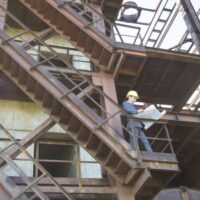
A serious construction accident can leave a worker facing surgery, months away from the job, and uncertainty about returning to the same trade. The first conversation after the accident usually centers on workers’ compensation. Medical treatment, wage benefits, and employer reporting requirements matter, but they do not always provide a complete picture of the available legal options.
Houston construction projects often bring general contractors, subcontractors, property owners, equipment suppliers, delivery companies, and specialized crews onto the same site. The company issuing a paycheck may have had no control over the crane, scaffold, electrical system, forklift, open trench, delivery vehicle, or falling material that caused the injury.
Responsibility can extend beyond the direct employer when another business created the hazard or failed to address a dangerous condition within its control. Working with an experienced Houston construction accident lawyer can help determine which companies were involved, how the work was divided, and whether a separate personal injury claim exists alongside workers’ compensation benefits.
Workers’ Compensation May Not Answer the Whole Question
Workers’ compensation can provide medical and income benefits after a job-related injury without requiring the injured employee to prove the employer was negligent. Those benefits can be critical after a serious construction accident, especially when the worker needs surgery, rehabilitation, medication, or time away from work.
Workers’ compensation also changes what claims can be brought against a covered employer. Under Texas Labor Code § 408.001, workers’ compensation benefits are generally the exclusive remedy against an employer that carries workers’ compensation insurance for a work-related injury. In plain English, if the employer has workers’ compensation coverage, the injured worker usually cannot bring an ordinary negligence lawsuit directly against that employer for the same injury.
That does not end the legal analysis. Texas does not require most private employers to carry workers’ compensation coverage. A company that provides coverage is commonly referred to as a subscriber. An employer without coverage is a non-subscriber. That difference can affect the worker’s legal options, making coverage verification an important early step after a construction site accident.
Houston Construction Sites Often Involve Several Companies
A large construction project rarely operates under one employer. A property owner may hire a general contractor. The general contractor may divide the work among subcontractors responsible for concrete, steel erection, framing, roofing, plumbing, electrical systems, excavation, scaffolding, traffic control, hauling, or equipment operation.
Each company may control a different part of the jobsite. One subcontractor may install guardrails while another crew works near the open edge. A crane company may provide equipment and an operator. A delivery company may move materials through an area occupied by several trades. A maintenance company may inspect or repair equipment used by workers from another employer.
The company that issues the paycheck does not necessarily control every hazard on the site. A construction worker may be injured by another subcontractor’s employee, unsafe equipment supplied by a rental company, poor site coordination by a general contractor, or a hazardous condition left uncorrected by a company that controlled that area.
OSHA’s multi-employer worksite policy recognizes that more than one employer can have safety responsibilities on the same project. OSHA classifications do not automatically decide a civil injury claim, but they can help frame who created, controlled, corrected, or exposed workers to a dangerous condition.
Third-Party Claims Can Exist Alongside Workers’ Compensation
The workers’ compensation restrictions that protect a covered employer do not automatically protect an outside company whose negligence caused the accident. Texas law allows an injured employee receiving workers’ compensation benefits to pursue damages from a responsible third party.
Under Texas Labor Code § 417.001, an employee or legal beneficiary can seek damages from a third party that becomes liable for a compensable injury or death. On a construction site, that third party could be another subcontractor, an equipment operator employed by a separate company, a delivery company, a maintenance contractor, a product manufacturer, or another business whose conduct contributed to the accident.
This matters because workers’ compensation does not cover every loss caused by a serious injury. A third-party personal injury claim may address pain, physical impairment, disfigurement, reduced future earning ability, loss of independence, and the broader effect of a permanent injury on daily life.
The two claims must be coordinated carefully. A workers’ compensation carrier may have reimbursement rights against part of a third-party recovery. That issue can affect how a settlement is evaluated and distributed, but it does not eliminate the injured worker’s right to pursue the outside company that caused or contributed to the injury.
Equipment Failures Can Shift the Focus Beyond the Employer
Construction workers depend on cranes, forklifts, aerial lifts, scaffolding, ladders, trenching equipment, power tools, harnesses, hoists, generators, and heavy machinery. Those tools and machines may be owned, rented, serviced, inspected, or operated by different companies.
When equipment fails, the investigation should not stop with the injured worker’s employer. A lift may have been returned to service with damaged controls. A crane may have missed required maintenance. A scaffold may have been assembled by another contractor. A harness or anchorage point may have been defective, missing, or used without proper instruction.
Equipment problems can involve design defects, manufacturing defects, poor maintenance, missing warnings, unclear operating instructions, or careless operation by another company’s employee. The legal issue depends on what failed, who controlled the equipment, and who had the ability to remove it from service before the injury.
Service records, inspection reports, repair histories, rental agreements, equipment manuals, photographs, and post-accident inspections can help show when the problem began and who had the opportunity to correct it.
Property Owner Liability Depends on Control and Knowledge
A property owner is not automatically responsible for every construction injury that occurs on the property. Many owners hire independent contractors and do not control the details of the work being performed. Texas law treats those situations differently from claims involving ordinary property visitors.
Texas Civil Practice and Remedies Code § 95.003 addresses certain injury claims brought by contractors, subcontractors, and their employees against property owners. When the statute applies, recovery generally requires proof that the property owner exercised or retained control over the manner in which the work was performed and had actual knowledge of the danger without providing an adequate warning.
This can be a fact-heavy issue. A written contract may describe the owner’s authority, but the owner’s actual conduct may matter just as much. An owner that directs how work must be done, controls access to a dangerous area, requires crews to continue around a known hazard, or takes charge of a specific safety decision occupies a different position from an owner that merely checks progress or receives updates.
The claim should focus on the specific condition that caused the injury, the work being performed, and the owner’s actual role at the site. Ownership alone is not enough. Control and knowledge are usually the critical questions.
Contracts and Site Records Can Show Who Controlled the Hazard
Construction accident claims often depend on documents that explain how responsibility was divided before the injury. Prime contracts, subcontracts, purchase orders, equipment agreements, job specifications, safety plans, and site rules may assign responsibility for fall protection, site access, inspections, housekeeping, traffic control, trench safety, or equipment maintenance.
Daily reports and safety meeting notes can show which crews were present and what concerns had already been raised. Emails, texts, photographs, inspection forms, toolbox talks, corrective-action reports, and incident records may show earlier complaints about the same hazard. Equipment logs may reveal who inspected, maintained, repaired, or authorized the use of a machine.
The jobsite itself can change quickly. Openings are covered. Scaffolds are dismantled. Trenches are filled. Damaged equipment is removed. Crews move to a different phase of construction. Video footage from security systems or nearby businesses may be erased under routine retention schedules.
Those records help answer the central question: which company controlled the hazard before the accident, and what did it do with that control?
Serious Construction Injuries Can Change Work and Daily Life
Construction injuries are often more than short-term medical events. A fall from height, crush injury, electrocution, trench collapse, equipment accident, burn, struck-by incident, or scaffold failure can cause traumatic brain injuries, spinal cord damage, fractures, amputations, nerve injuries, internal injuries, and chronic pain.
The injury can also threaten the worker’s trade. A carpenter who cannot climb, lift, or use tools may be unable to return to the same work. An electrician with nerve damage may struggle with fine motor control. A heavy equipment operator with a traumatic brain injury may face problems with concentration, balance, and reaction time. A laborer with a back injury may be unable to tolerate bending, carrying, or long hours on concrete.
Medical records show treatment, but evidence from daily life shows impact. Missed work, reduced earning capacity, household limitations, sleep problems, pain with movement, and loss of independence can all become part of the claim when a construction injury changes the worker’s future.
What To Do After a Construction Site Accident
The first priority after a construction accident is medical care. Once the immediate emergency is under control, several steps can help preserve the injury claim and the evidence needed to evaluate responsibility beyond workers’ compensation.
- Report the injury and make sure the report identifies the task, location, equipment, and companies involved.
- Get medical care and explain exactly how the accident happened.
- Photograph the hazard, equipment, work area, warning signs, protective gear, and visible injuries if it is safe to do so.
- Write down the names of witnesses, supervisors, subcontractors, equipment operators, and other companies working nearby.
- Save text messages, schedules, work orders, safety materials, incident reports, and any written instructions related to the job.
- Keep copies of workers’ compensation documents, medical records, work restrictions, and wage information.
- Avoid guessing about who caused the accident if the facts are still unclear.
- Do not sign broad releases or give detailed statements before understanding how workers’ compensation and third-party claims may fit together.
These steps help protect details that can be lost as the project progresses. They also help prevent the accident from being treated as only a workers’ compensation matter when another company may share responsibility.
Early Legal Guidance Helps Identify Every Possible Claim
Workers’ compensation paperwork may begin soon after the injury, but no one automatically investigates whether another company shares responsibility. That separate issue can be missed while the injured worker is focused on treatment, wage benefits, and the uncertainty of returning to work.
Construction projects move fast. The crew that caused the hazard may leave the site. The equipment may be repaired or returned to a rental company. A dangerous opening may be covered. A scaffold may be dismantled. The records showing who controlled the work may be scattered across several companies.
Early legal guidance from an experienced construction accident attorney in Houston can also help evaluate how workers’ compensation benefits and a potential third-party claim fit together without forcing major decisions before the medical outlook becomes clearer. The goal is to preserve the evidence, identify the responsible parties, and protect the worker’s options before the site changes.
FAQs About Construction Accident Claims in Houston
Can I sue someone besides my employer after a construction accident?
Yes, depending on the facts. If another company caused or contributed to the accident, a third-party personal injury claim may be available even if you are receiving workers’ compensation benefits. Potential third parties may include subcontractors, equipment companies, delivery companies, maintenance contractors, property owners, or product manufacturers.
What if my employer has workers’ compensation insurance?
Workers’ compensation may provide medical and income benefits, and it may limit ordinary negligence claims against the covered employer. It does not automatically prevent claims against unrelated companies that caused or contributed to the injury.
How do I know if my employer has workers’ compensation coverage?
Coverage can be verified through the Texas Department of Insurance, Division of Workers’ Compensation. Coverage status matters because Texas does not require most private employers to carry workers’ compensation insurance, and an employer’s subscriber or non-subscriber status can affect the legal options available after an injury.
Why are third-party claims important?
Third-party claims can address losses that workers’ compensation may not fully cover, including pain, physical impairment, disfigurement, reduced earning ability, and long-term changes to daily life. These claims can be especially important after catastrophic construction injuries.
What evidence matters after a construction accident?
Important evidence may include photographs, incident reports, safety meeting notes, contracts, subcontracts, inspection records, maintenance logs, equipment manuals, repair records, witness names, video footage, work orders, and communications between contractors.
Contact The Law Office of Shane R. Kadlec for a Free Consultation
If you were seriously injured on a construction site, workers’ compensation may not be the only source of recovery. You should not have to untangle questions about contractors, jobsite control, equipment failures, and third-party liability while dealing with medical treatment and time away from work. Our Board-Certified Personal Injury lawyers and legal team take a careful, whole-claim approach to serious construction accidents, with attention to both the immediate disruption and the lasting effect of the injury.
At The Law Office of Shane R. Kadlec, we represent injured construction workers throughout Houston and Harris County with the care and attention serious accident claims deserve. Contact us for a free consultation with a trusted Houston construction accident lawyer and learn how we can help pursue recovery from every party responsible for your injuries.
Sources:
Texas Legislature, Texas Labor Code § 408.001, Exclusive Remedy
statutes.capitol.texas.gov/Docs/LA/htm/LA.408.htm
Texas Legislature, Texas Labor Code § 417.001, Third-Party Liability
statutes.capitol.texas.gov/Docs/LA/htm/LA.417.htm
Texas Legislature, Texas Civil Practice and Remedies Code § 95.003, Property Owner Liability
statutes.capitol.texas.gov/Docs/CP/htm/CP.95.htm
Texas Department of Insurance, Workers’ Compensation Insurance Guide
tdi.texas.gov/pubs/consumer/cb030.html
tdi.texas.gov/wc/employer/coverage.html
Occupational Safety and Health Administration, Multi-Employer Citation Policy
osha.gov/enforcement/directives/cpl-02-00-124