

Hydroplaning Accidents and the Question of Driver Responsibility
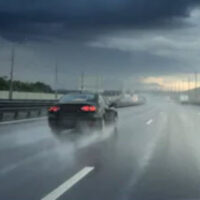
A Houston driver can lose traction within seconds when heavy rain leaves water across a freeway or surface street. Once the tires begin riding on water instead of maintaining full contact with the pavement, steering and braking become much less effective. Yet saying that a vehicle “hydroplaned” does not answer the most important question after a serious crash. What was the driver doing before control was lost?
Texas law requires drivers to adjust their speed to weather and highway conditions, even when they are traveling below the posted speed limit. A driver who enters standing water too fast, follows another vehicle too closely, makes an abrupt maneuver, or continues driving on badly worn tires may still bear responsibility for the resulting collision. When fault is disputed after a rain-related crash, working with an experienced Houston car accident lawyer can help identify the evidence showing what happened before the vehicle began to hydroplane.
What to Do After a Hydroplaning Accident
The first priority after any serious crash is medical care. Hydroplaning accidents frequently involve more than a simple loss of traction. A car may spin into another lane, strike a concrete barrier, collide with another vehicle, or be hit again by traffic approaching from behind.
Once immediate medical needs are addressed, preserving information about the roadway and weather conditions can help explain the crash later. Rain may stop, standing water may drain away, vehicles may be repaired, and tire condition can change after the accident.
When it is safe to do so, useful steps include:
- Photograph the vehicles, tire damage, roadway, standing water, lane markings, and surrounding area.
- Preserve dashcam footage before it is automatically overwritten.
- Obtain contact information from witnesses who saw the vehicle lose control or observed water collecting on the roadway.
- Keep photographs showing the tires and remaining tread rather than replacing or disposing of damaged tires without documentation.
- Save medical records, repair documents, towing records, and information about missed work.
- Avoid guessing about speed, traction, or the cause of the crash when speaking with an insurance adjuster.
These records can become important when one insurer describes the accident as unavoidable while another argues that the driver failed to respond appropriately to conditions that were already visible.
Hydroplaning Does Not Automatically Mean the Driver Was Negligent
Hydroplaning occurs when water interferes with contact between the tires and roadway. TxDOT explains that the risk depends on several interacting factors, including water depth, vehicle speed, tire tread depth, tire inflation, pavement condition, and roadway geometry. Its Hydraulic Design Manual notes that hydroplaning can occur at 55 mph with as little as 0.08 inches of water.
That does not mean every driver who hydroplanes caused the crash. A sudden area of accumulated water may be difficult to see, particularly during a heavy downpour or at night. Another driver might make an unexpected movement that forces a quick steering response. A vehicle could also enter a patch of water that was substantially deeper than conditions elsewhere on the roadway.
Responsibility depends on the circumstances leading up to the loss of control. Investigating those circumstances is more useful than simply accepting “hydroplaning” as either proof of negligence or a complete excuse for the accident.
Driving the Speed Limit May Still Be Too Fast in Heavy Rain
One of the most common disputes after a hydroplaning crash involves speed. A driver may insist that the vehicle was traveling at or below the posted limit and could not have been speeding.
Texas Transportation Code § 545.351 looks beyond the number on the speed-limit sign. It prohibits driving faster than is reasonable and prudent under the existing circumstances and requires an appropriate reduction in speed when weather or highway conditions create a special hazard.
That distinction is important during a Houston downpour. A speed that is appropriate on dry pavement may provide too little margin for standing water, poor visibility, reduced traction, and slower stopping. NHTSA likewise advises motorists to slow down on slick roads and increase following distance because vehicles are harder to control and stop in the rain.
An investigation may compare the driver’s estimated speed with rainfall conditions, roadway photographs, video, vehicle data, witness accounts, and the movement of the car immediately before impact. The fact that the driver was not exceeding the posted limit does not end that inquiry.
Tire Condition Can Change the Responsibility Analysis
A vehicle’s tires are in contact with the roadway, making tread and inflation particularly relevant in a hydroplaning accident.
NHTSA explains that tire tread provides traction that helps prevent slipping on wet roads and recommends replacing tires once tread is worn to 2/32 of an inch. The agency also identifies proper inflation as an important part of tire safety.
After a serious crash, photographs and inspections of the tires may show substantial tread wear, uneven wear, damage, or inflation issues. Maintenance records can also help establish when tires were purchased, inspected, rotated, or replaced.
Tire condition does not automatically establish fault. It is one part of the circumstances surrounding the crash. A vehicle traveling at an appropriate speed on properly maintained tires may react very differently to standing water than the same vehicle traveling faster on badly worn tread.
Following Too Closely Creates Another Problem on Wet Roads
Hydroplaning does not always cause a vehicle to spin across the freeway. Sometimes a driver temporarily loses braking traction and cannot stop before striking traffic ahead.
Texas Transportation Code § 545.062 requires a driver following another vehicle to maintain a clear distance that allows the driver to safely stop without colliding with the vehicle ahead, taking speed, traffic, and highway conditions into account.
Rain changes those conditions. A driver following at a distance that feels comfortable on dry pavement may have insufficient space once traction decreases and traffic ahead suddenly slows. If the lead vehicle encounters water and reduces speed, the following driver may need additional room to react safely.
This issue can become particularly serious during Houston freeway traffic, where a sudden slowdown on I-45, I-10, I-69, or the Loop can involve several vehicles within seconds. One driver may hydroplane into traffic while another compounds the accident by following too closely or failing to reduce speed for the rain.
What the Driver Did Before Losing Control Can Reveal Fault
The most useful evidence in a hydroplaning case often concerns the seconds before the vehicle started sliding.
Dashcam footage might show visible spray and standing water ahead. Video may establish that surrounding traffic had already slowed while one vehicle maintained a substantially higher speed. Witnesses may remember abrupt acceleration, a quick lane change, or a driver passing other vehicles shortly before losing control.
Vehicle evidence may add another piece of the sequence. Depending on the vehicle and crash, electronic information may help investigators evaluate speed, braking, and other activity close to impact. Physical damage, tire condition, debris, and final vehicle positions can then be compared with those records.
A careful investigation by a Houston car accident lawyer can place this evidence together before an insurance company reduces a complicated crash to a simple statement that “the driver hit water.”
More Than One Driver May Share Responsibility
Hydroplaning accidents frequently involve several events rather than one isolated mistake. A vehicle may lose traction and move sideways into another lane. A second driver may be traveling too fast to avoid it. A third vehicle may then strike the developing collision because its driver was following too closely.
That makes disputed accounts particularly important. Insurance companies representing different drivers may each attempt to shift responsibility elsewhere. Photographs, video, witness statements, tire evidence, vehicle data, and roadway conditions can help separate the initial loss of traction from the driving decisions that caused or worsened the crash.
Standing Water May Also Raise Questions About the Roadway
Driver conduct is not the only factual issue worth examining when a large amount of water repeatedly collects at the same location.
TxDOT’s hydroplaning guidance recognizes that pavement slope, roadway drainage, water depth, surface characteristics, and inlet placement influence the potential for hydroplaning. A crash investigation may reveal that water was unusually deep or collecting in an area where drivers would not ordinarily expect it.
That does not automatically make a governmental entity or another party responsible. Claims involving roadway conditions raise separate questions involving control of the road, notice, governmental immunity, and the specific facts surrounding the condition. The immediate point in a car accident investigation is to document the water before it disappears and determine how the roadway condition interacted with the conduct of the drivers.
Serious Injuries Can Follow a Sudden Loss of Traction
Hydroplaning crashes can produce severe injuries because control may be lost while the vehicle is traveling at freeway speed. A car that begins sliding sideways can strike another vehicle at an angle, cross multiple lanes, hit a median, or roll after leaving the roadway.
Occupants may suffer traumatic brain injuries, spinal injuries, fractures, internal injuries, shoulder injuries, or other trauma. Secondary impacts can cause additional injuries after the original vehicle has already lost control.
Medical records help document the connection between the collision and those injuries. When treatment extends over time, the personal injury claim may also involve lost wages, rehabilitation, future medical care, physical limitations, and other losses resulting from the accident.
Frequently Asked Questions About Houston Hydroplaning Accidents
Is a driver automatically at fault after hydroplaning?
No. Hydroplaning describes a loss of tire contact and traction. Responsibility depends on factors such as speed, water depth, tire condition, following distance, visibility, and what the driver reasonably could have done before losing control.
Can a driver be responsible even if traveling below the speed limit?
Yes. Texas Transportation Code § 545.351 requires speed to be reasonable for the existing conditions. Heavy rain or standing water may require a driver to travel substantially below the posted limit.
Can worn tires affect a hydroplaning accident claim?
They can. Tire tread and inflation affect wet-road traction and hydroplaning risk. Photographs, inspections, maintenance records, and tire condition after the crash may become part of the evidence used to determine responsibility.
What if several cars were involved?
Responsibility may be divided among several drivers. The vehicle that first hydroplaned is not necessarily responsible for every later impact, particularly if another driver was speeding, following too closely, or otherwise unable to react safely to the developing collision.
What if standing water caused the crash?
Standing water is part of the investigation, but its presence alone does not determine liability. The depth and visibility of the water, driver’s speed and actions, tire condition, drainage, roadway condition, and other circumstances may all require review.
Contact the Law Office of Shane R. Kadlec After a Houston Hydroplaning Accident
A serious hydroplaning crash deserves more than an assumption that bad weather was responsible. Speed, tire condition, following distance, roadway conditions, vehicle data, and evidence from the minutes surrounding the collision may show that another driver’s choices contributed to the loss of control or made the resulting crash much worse.
The Law Office of Shane R. Kadlec has decades of experience handling serious injury claims in Houston and Harris County, with the experience and resources to investigate disputed accidents and preserve evidence before it disappears. Contact our firm to speak with an experienced Houston car accident lawyer and learn how we can help evaluate responsibility, address insurance company arguments, and pursue compensation after a serious rain-related collision.
Sources:
- Texas Legislature, Texas Transportation Code § 545.351, Maximum Speed Requirement.
statutes.capitol.texas.gov/?tab=1&code=TN&chapter=TN.545&artSec=545.351 - Texas Legislature, Texas Transportation Code § 545.062, Following Distance.
statutes.capitol.texas.gov/?tab=1&code=TN&chapter=TN.545&artSec=545.062 - Texas Legislature, Texas Civil Practice and Remedies Code § 33.001, Proportionate Responsibility.
statutes.capitol.texas.gov/?tab=1&code=CP&chapter=CP.33&artSec=33.001 - Texas Department of Transportation, Hydraulic Design Manual, “Hydroplaning.”
txdot.gov/manuals/des/hyd/chapter-10–storm-drains/section-4–pavement-drainage/hydroplaning.html - National Highway Traffic Safety Administration, “Driving in Severe Weather.”
nhtsa.gov/road-safety/driving-in-severe-weather - National Highway Traffic Safety Administration, “Tire Safety Ratings and Awareness.”
nhtsa.gov/vehicle-safety/tires